Years in Business

How AI Can Help Your Business Grow
Read Full Article


Years in Business

Projects Delivered

Client Relationships
Countries Served
Nextwebi applies AI to demand planning, warehouse activity, replenishment, procurement, vendor coordination, inventory search, and reporting. Each application reflects the client’s stock model, locations, users, available data, connected systems, approval rules, and the decisions AI is authorised to support or perform.

Nextwebi develops forecasting applications that analyse authorised sales histories, stock movements, lead times, seasonality, promotions, and other commercial inputs to estimate future demand. Our machine learning development services can support SKU- and location-level forecasting when sufficient representative data are available, while planning teams retain control over purchasing and allocation decisions.

Warehouse teams gain AI-assisted visibility into stock locations, movement patterns, picking activity, storage utilisation, and operational exceptions. Our warehouse applications use current operational data to recommend picking priorities and storage adjustments, while supervisors retain approval over changes affecting active fulfilment operations.
For inventory planners, we deliver AI-assisted replenishment tools that evaluate current stock, forecast demand, lead times, safety-stock requirements, reorder rules, and open purchase orders. Recommendations and permitted replenishment actions follow client-defined thresholds, budget limits, validation requirements, and approval checkpoints.

AI procurement software from Nextwebi assesses authorised supplier pricing, delivery performance, lead times, order histories, and contractual conditions. These insights help purchasing teams compare sourcing options and identify potential supply risks, while supplier selection, spending, and purchase commitments remain subject to client-defined approval rules.

Our AI agent development services support vendor workflows that prepare purchase orders, monitor supplier responses, follow up on delivery exceptions, and route unresolved issues to authorised personnel. Tool permissions, action limits, approval thresholds, audit records, and escalation paths are established before an agent interacts with procurement or vendor systems.

For multi-location businesses, our applications coordinate stock information across warehouses, stores, fulfilment centres, and ecommerce channels within a shared inventory view. Nextwebi’s custom API development services connect WMS, ERP, OMS, POS, and commerce systems using defined validation, synchronisation, exception-handling, and data-ownership rules.

Our AI-powered product discovery applications interpret natural-language queries and product attributes, helping warehouse, sales, service, and purchasing teams locate relevant items without exact SKU codes. Results are generated from approved catalogue data, current stock availability, user permissions, search intent, and defined relevance thresholds.

Nextwebi’s AI chatbot development services enable inventory assistants to check stock availability, identify suitable alternatives, retrieve expected replenishment dates, and explain approved inventory policies. Authentication, authorised data access, grounded responses, fallback behaviour, and staff escalation help manage sensitive or uncertain requests.

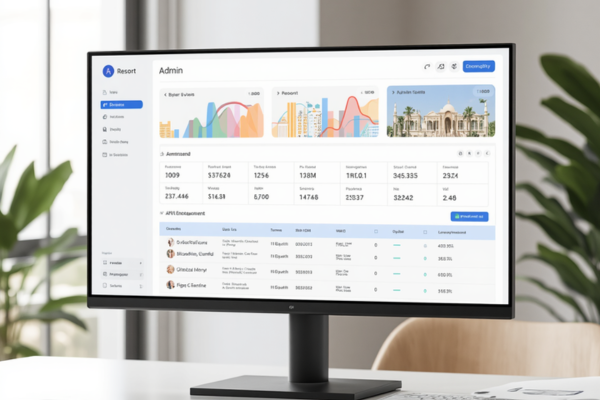
Inventory dashboards bring stock levels, movements, ageing, forecast variance, supplier performance, replenishment activity, and operational exceptions into one reporting environment.. Our Power BI development services organise relevant metrics into accessible reports, while AI-assisted analysis helps authorised teams investigate unusual patterns, discrepancies, and emerging stock risks.
AI inventory management software from Nextwebi connects forecasting and controlled automation with the workflows used to receive, store, move, replenish, procure, sell, and report stock. We develop these applications for warehouse operators, retailers, distributors, manufacturers, ecommerce teams, procurement departments, and organisations managing inventory across multiple locations.
Role-specific experiences give warehouse teams, purchasing staff, planners, sales users, vendors, managers, and administrators access to relevant information and permitted actions. Our web application development services connect user interfaces, inventory rules, databases, APIs, analytics, and administrative controls within one operational application.
Model selection and automation scope reflect the intended use case, available data, accuracy requirements, latency, privacy, operational risk, and inventory ownership. Predictive models can support forecasting and exception detection, generative AI can assist with inventory search and communication, and agentic actions are introduced only with defined permissions, validation, monitoring, and human oversight.

Years in Business
Projects Delivered
Client Relationships
Countries Served
1. RFID Inventory Tracking: Our RFID solutions support real-time tracking through compatible RFID tags and readers and printers. The system records approved inventory movement and helps teams locate tagged stock across supported storage and operational areas.
2. Barcode Data Capture: Barcode-supported workflows help warehouse teams identify items during receiving and storage and picking and dispatch. Each recorded action updates the relevant inventory transaction after required validation.
3. Goods Receiving Records: The application connects received items with approved purchase orders and supplier records. Warehouse users verify quantities and item details and storage assignments before the stock becomes available for further operations.
4. Stock Movement Traceability: Inventory transfers between bins and warehouses and stores and fulfilment locations are recorded with the responsible user and movement time and source and destination. This creates a clear history for authorised operational review.
5. Product and Location Records: Our master data management services help organise approved product identifiers and item attributes and warehouse locations. Consistent master records improve the reliability of inventory tracking across connected systems.
6. Picking and Dispatch Updates: Warehouse teams record picked and packed and dispatched items through supported scanning workflows. The inventory application validates each update against approved orders and stock records before completion.
7. Inventory and Order Connectivity: Our custom order management solutions connect available stock with order processing and warehouse assignments and fulfilment updates. This helps approved teams maintain consistent inventory and order information.
8. Inventory Audit History: The platform maintains traceable records of stock receipts and movements and adjustments and dispatch activity. Authorised teams use this history to review inventory differences and investigate operational exceptions.
Our commitment to innovation, quality, and customer success has been recognized through prestigious industry awards and certifications. These achievements reflect the trust our clients place in us and our dedication to delivering exceptional digital solutions.

ISO 9001 Quality Management Certified

ISO 27001 Information Security Certified

Clutch Top IT Services

GoodFirms Top IT Services Provider

NIST Cybersecurity Framework Aligned
The technologies and tools that power our service delivery.
Nextwebi connects AI capabilities with the stock, procurement, fulfilment, and business systems that support daily inventory operations. Our approach combines application engineering, model evaluation, integration planning, security, and human oversight so the software remains aligned with the client’s data, operational rules, and inventory responsibilities.
Nextwebi links every proposed AI capability to a defined inventory objective, such as improving forecast usefulness, reducing replenishment effort, increasing stock visibility, or identifying operational exceptions. Agreed acceptance criteria allow our team and authorised client stakeholders to evaluate performance against the intended operational outcome.
Our team assesses sales histories, stock movements, product records, supplier data, lead times, location details, and other approved operational sources before model development. Data gaps, inconsistent identifiers, unsuitable labels, update responsibilities, and drift risks are documented to improve the reliability and interpretation of AI outputs.
Clients retain defined ownership and control across their WMS, ERP, OMS, POS, ecommerce, procurement, and vendor systems. Nextwebi establishes validation, synchronisation, monitoring, reconciliation, and exception-handling rules without allowing AI-generated output to replace confirmed inventory or transaction records.
Client-defined permissions and approval checkpoints determine when AI may recommend, prepare, or perform an inventory action. Purchase orders, supplier commitments, stock transfers, pricing changes, write-offs, and other sensitive activities remain governed by authorised personnel and operational rules.
Role-based interfaces give warehouse staff, planners, buyers, sales teams, vendors, managers, and administrators access to relevant information and permitted actions. Nextwebi’s UI/UX design services organise forecasts, alerts, searches, approvals, exceptions, and inventory workflows into clear web and mobile experiences.
Security planning covers authentication, role-based access, supplier records, commercial information, APIs, AI-model access, and administrative permissions according to their sensitivity. Risk assessments provided with our cybersecurity consulting services help identify appropriate safeguards across internal, cloud, warehouse, and third-party connections.
Nextwebi can monitor forecast error, false alerts, agent actions, integration failures, response times, usage, and operating costs according to the agreed support scope. Our application maintenance and support services can address issue resolution, system updates, security improvements, model refinements, and controlled feature enhancements.
Nextwebi begins each AI inventory project by reviewing the client’s stock workflows, operational data, connected systems, user responsibilities, and suitable AI use cases. Our team then translates the approved requirements into role-specific experiences, models, integrations, and application modules before validating the complete solution and preparing it for production.
Let's begin with a no-obligation
conversation.
Our team works with warehouse, procurement, planning, sales, operations, IT, and business stakeholders to map stock flows, recurring decisions, system constraints, and intended outcomes. Proposed AI use cases are prioritised according to operational value, data readiness, implementation risk, and the required level of human oversight.
Nextwebi reviews approved product records, stock movements, sales histories, supplier information, warehouse data, and connected platforms required for the application. Data-access limitations, quality concerns, ownership responsibilities, update behaviour, and integration dependencies are addressed before model development begins.
Forecasts, alerts, searches, recommendations, approvals, agent actions, and exception paths are organised into role-specific user journeys. Our application wireframing services create reviewable interfaces that help stakeholders confirm information priorities, inventory actions, staff handovers, and human-control points.
The AI team selects suitable modelling approaches and defines features, retrieval sources, prompts, tool access, permissions, validation rules, monitoring, fallback behaviour, and data-retention requirements. Our cloud consulting services help plan availability, response times, scalability, recovery, and expected AI usage across approved environments.
Our engineers implement approved application modules, integrations, AI models, interfaces, administrative controls, and agent tools in planned stages with demonstrations and review checkpoints. Nextwebi’s software testing services validate inventory workflows, permissions, calculations, forecasts, system failures, device compatibility, performance, and representative operational scenarios.
Our release team prepares the approved application for production by confirming user access, system integrations, escalation paths, analytics, monitoring, and operational responsibilities with client stakeholders. Live forecast behaviour, inventory exceptions, agent actions, user feedback, response times, and operating costs are reviewed to resolve issues and prioritise planned improvements.
Let's talk about how we can craft a user experience that not only
looks great but drives real growth for your product.!
Read what our clients say about their experience with Nextwebi. Their feedback highlights how our AI solutions have improved inventory visibility, forecasting, stock control, and everyday decision-making.
The service can include inventory-workflow discovery, data assessment, experience design, AI and application engineering, integration with WMS, ERP, OMS, POS, or ecommerce systems, testing, deployment, monitoring, and ongoing support. The exact scope depends on the client’s inventory model, locations, data, connected platforms, and permitted AI actions.
-c4847cd3.webp)
-80b070a4.webp)