Years in Business

How AI Can Help Your Business Grow
Read Full Article


Years in Business

Projects Delivered

Client Relationships
Countries Served
Our ecommerce website design and development services support organisations with different audiences, transaction structures, fulfilment requirements, and expansion plans. Each platform is configured around the business rather than a generic ecommerce template.

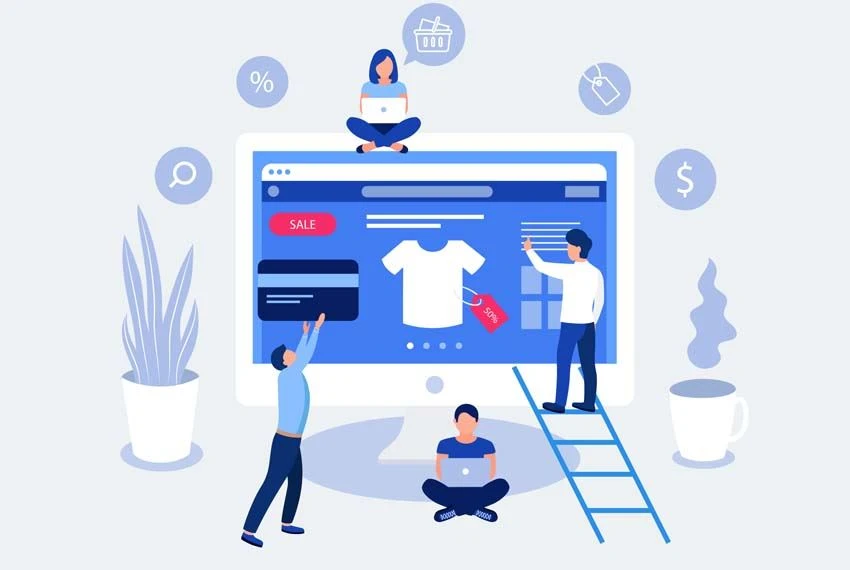
Product catalogues, search, merchandising, customer accounts, cart, checkout, payments, and order tracking come together within one cohesive platform. Our ecommerce website development services align each storefront with the brand, customer journey, and sales model.

Frontend presentation and backend commerce services operate independently through APIs, giving teams greater control over customer experience, content delivery, integrations, and future channel expansion.

Account-based catalogues, contract pricing, bulk orders, credit terms, purchase approvals, quotations, invoices, and repeat-order tools support wholesale and distribution workflows. Our custom portal development services can also provide role-specific access for buyers, sales teams, distributors, and administrators.

Our web application development services support multi-vendor marketplaces with seller onboarding, catalogue submissions, product moderation, commissions, settlements, returns, dispute management, and vendor reporting within one customer-facing platform.

Our custom ecommerce website development capabilities allow customers to select dimensions, materials, components, finishes, and other options while compatible combinations, pricing, availability, and lead times update dynamically.

We provide wholesale buyers with assigned catalogues, negotiated pricing, minimum-order rules, purchasing permissions, invoice access, and simplified repeat ordering. Our B2B ecommerce solutions bring these functions together within a secure platform tailored to each client’s wholesale operations.

We provide the Multiple brands, regions, catalogues, currencies, domains, and customer groups that can operate from shared commerce services while retaining separate storefront experiences and administrative controls.

Our global web development services help international ecommerce businesses manage localised content, multiple currencies, regional payment methods, tax configurations, shipping rules, and market-specific catalogues from one platform.

Our content-led commerce websites combine editorial content, buying guides, curated collections, product education, and transactional pages to improve product discovery and support conversions.

We create B2B2C ecommerce platforms that share product and inventory data across wholesale and direct-to-consumer journeys. Integration with a B2B order management system supports separate pricing, permissions, catalogues, payment terms, and checkout rules for each customer group.
As a custom ecommerce website development company, we create storefronts and operational systems around each client’s selling model instead of forcing essential workflows into a predefined theme. Product discovery, pricing, account rules, checkout, payments, inventory, fulfillment, content, and reporting are planned as one connected commerce environment.
Custom development is most valuable when standard platforms cannot support the required checkout logic, catalogue structure, user roles, integrations, performance targets, or ownership model without extensive workarounds. We assess those requirements first and recommend a custom build only when it provides a clear technical or commercial advantage.
Businesses that need an app alongside the storefront can extend the same commerce ecosystem with our ecommerce mobile application development services, keeping products, customers, inventory, orders, and payments synchronised across web and mobile channels.
Our AI application development services for custom ecommerce use catalogue, browsing, transaction, and inventory data to improve product recommendations, intelligent search, customer segmentation, and demand forecasting. Data quality, privacy, integration requirements, and performance measures are evaluated before implementation.

Years in Business
Projects Delivered
Client Relationships
Countries Served
1. Commerce Data Readiness: Product records and categories and inventory details and order information are reviewed before AI implementation begins. Our data science services help organise relevant data and identify missing or inconsistent information that may affect AI results.
2. AI Use Case Planning: Each AI use case is selected according to a clear ecommerce requirement. The planning process defines the intended user and expected result and available data and required system connections. This keeps development focused on measurable business needs.
3. Commerce System Integration: AI components are connected with the custom storefront and catalogue and inventory platform and order system through planned APIs. Defined data ownership and update rules help maintain consistent information across the ecommerce environment.
4. Merchandising and Policy Controls: Business teams retain control over the products and offers and information presented through AI-assisted experiences. Approved merchandising rules and stock conditions and customer policies guide each output before it reaches the shopper.
5. AI Result Validation: AI outputs are tested against representative catalogue information and customer journeys. The review process checks result accuracy and unsuitable responses and missing product details. Human approval remains part of workflows with commercial or customer impact.
6. Data Security and Access Management: Access permissions limit which systems and users interact with customer and transaction data. Our cybersecurity consulting services support the assessment of authentication and API exposure and sensitive data handling across connected ecommerce systems.
7. Ongoing AI Performance Review: AI performance is reviewed after launch as product information and customer activity and business requirements change. Monitoring helps identify declining result quality and integration issues. Controlled updates keep each feature aligned with the ecommerce platform.
Our commitment to innovation, quality, and customer success has been recognized through prestigious industry awards and certifications. These achievements reflect the trust our clients place in us and our dedication to delivering exceptional digital solutions.

ISO 9001 Quality Management Certified

ISO 27001 Information Security Certified

Clutch Top IT Services

GoodFirms Top IT Services Provider

NIST Cybersecurity Framework Aligned
The technologies and tools that power our service delivery.
Our ecommerce web development expertise covers commerce strategy, UX design, software engineering, integrations, data migration, testing, cloud deployment, and ongoing support. Clients receive a future-ready ecommerce platform aligned with their operations, technical requirements, and commercial goals.
We use custom ecommerce development to plan each platform around catalogue size, transaction volume, customer roles, pricing logic, integrations, performance expectations, and future expansion needs.
Our designers and developers work from shared customer journeys, data structures, requirements, and acceptance criteria. This coordinated approach strengthens our full-stack development services, keeping storefront decisions aligned with backend functionality.
Our AI chatbot development services can support product discovery, order assistance, returns guidance, customer support, and contextual responses connected to approved catalogue, inventory, CRM, and policy data.
Source data, redirects, integrations, testing, content, operational readiness, and launch sequencing are mapped together to reduce disruption during a platform transition.
We test critical ecommerce journeys across devices, integrations, traffic levels, and security conditions before launch. See our ecommerce performance optimization case study for a practical example.
Our website maintenance services can cover monitoring, issue resolution, security patches, integration updates, performance improvements, content support, and planned enhancements after launch.
We provide end-to-end ecommerce development, guiding each platform from commercial discovery and UX planning to engineering, migration, testing, launch, and continuous improvement.
Let's begin with a no-obligation
conversation.
We conduct an ecommerce technology assessment covering the selling model, customers, catalogue, existing systems, operational workflows, integrations, pain points, ownership requirements, priorities, and success measures.
Our UI/UX design services map search, product evaluation, account, cart, checkout, payment, order, return, and administrative journeys before interface development begins.
We define the frontend, backend, databases, APIs, user roles, data ownership, environments, security controls, and failure-handling processes alongside migration and integration dependencies.
Our team applies proven ecommerce website design and development practices to deliver storefront components, commerce logic, administration tools, APIs, and third-party integrations in planned stages with regular demonstrations.
We map, transform, migrate, and validate approved product, category, customer, order, content, URL, and related records against the source platform.
Our testing covers customer journeys, devices, browsers, user roles, payments, integrations, data accuracy, transaction exceptions, expected traffic, and security requirements.
Before release, we follow a structured ecommerce website testing process covering production environments, redirects, analytics, monitoring, access permissions, launch responsibilities, and rollback procedures.
Real-world usage, support findings, analytics, customer feedback, and operational priorities help us plan controlled improvements to performance, UX, integrations, and platform features.
Let's talk about how we can craft a user experience that not only
looks great but drives real growth for your product.!
We build custom ecommerce websites around each business’s products, customers, and operational needs. See how our tailored solutions have helped ecommerce brands improve shopping experiences, simplify management, and prepare their online stores for growth.
A custom ecommerce website development company plans, designs, engineers, integrates, tests, deploys, and supports commerce platforms tailored to a business’s catalogue, customers, checkout rules, data, operational systems, and growth requirements.

-80b070a4.webp)